Unlimited Synthetic 3D Antibody Binding Data

Boost your AI-antibody discovery with unlimited, high-quality synthetic binding data.

Explore Features

Our Vision

We assist AI-driven antibody discovery with unprecedented large-scale physics-based synthetic datasets with ground truth binding information.
We generate fit-for-purpose synthetic datasets to stress-test and derisk AI strategies before they are applied to real-world data.
AI strategies are tested on our binding simulator, allowing reinforcement learning and agentic ML optimization.

AB Synth Logo

Our Story

ABsynth AS emerged from a leading computational immunology group (Prof. Victor Greiff, University of Oslo, Norway) that was in need for a way to test, improve and benchmark their machine-learning strategies for predicting antibody specificity.
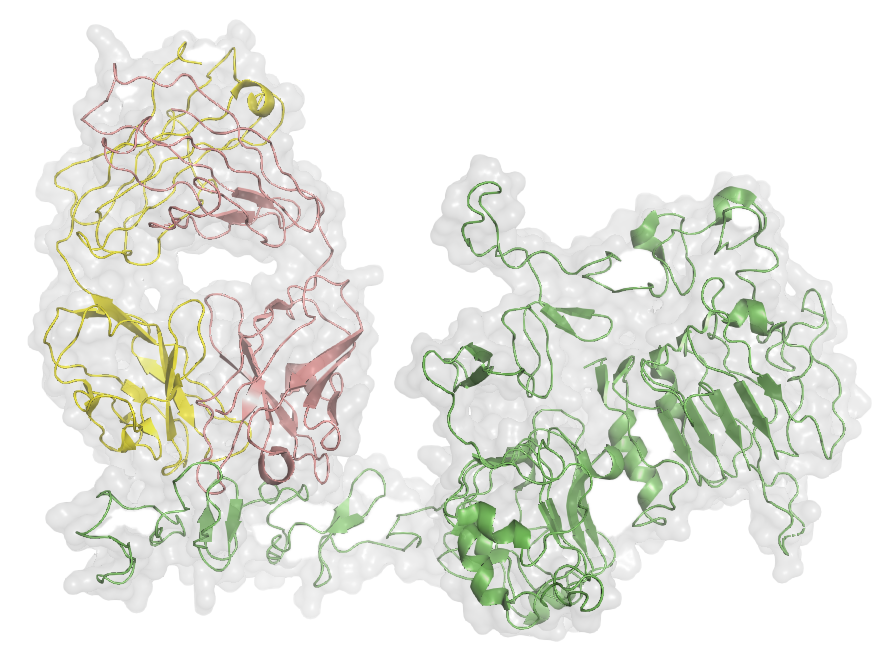
We developed a binding simulator (Absolut!) to generate synthetic 3D antibody-antigen complexes of one billion antibody-antigen complexes, to unlock continuous benchmarking and model refinement. See our article published in Nature Computational Science click here for more detail

We have already shown that AI lessons learnt using Absolut! translate into real-world, such as ranking of AI models or the optimization of dataset design. We are now developing Absolut 2.0, a new binding simulator with native protein conformations.


Challenges in AI Antibody Discovery

Computational prediction of antibody binding is still an open challenge with high therapeutic relevance. Designing antibody therapeutics is highly complex and requires optimization of affinity, epitope specificity, off-target binding, and many developability parameters.

The problems in AI discovery

  • No adequate solutions exist for testing and refining your assumptions for your Ab-Ag algorithm

  • No solution exist for generating immense amount of synthetic 3D Ab-Ag binding data with real world relevance

Some Key Challenges

  • Unavailability of large-scale structural data

  • Predicting antibody structure is an unsolved problem

  • High complexity in Ab-Ag Binding

  • The same antibody has different structures alone or bound to target

  • Lack of unified ML framework

  • High costs for experimental 3D Ab-Ag binding data

On Demand Synthetic Data Solution

We generate real world relevant antibody–antigen binding structures using the Absolut! simulation framework. Each synthetic complex provides paratope, epitope and affinity information to train and benchmark machine-learning methods on different tasks. After ML models are trained, their predictions are tested back on our simulation framework as an oracle.
Absolut 1.0 already reproduces complex antigen topologies and amino acid compositions, exponential amounts of binding structures, non-linear and long-range amino acid dependencies in the binding region, immunogenic and immunodominant regions, complex epitope-paratope matching rules, and a real-world broken similarly landscape (similar sequences do not always bind in the same way).
The simulator Absolut 2.0 under development will allow to directly match simulated and real-world structures.

Unmatched Complexity

No other software offers synthetic data with comparable intricacy; our 3D structures capture 8 levels of complexity of the conformational diversity of antibody–antigen binding.

Unparalleled Capacity

Generate unlimited, deterministic, scalable datasets to test ML architectures, dataset sizes and negative selection strategies.

Tailored to Your Needs

Parameterize simulations for a variety of AI-driven discovery tasks, from lead optimization to hit discovery and de-risking off-target binding.

Real-World Relevance

Accuracy rankings of ML methods on synthetic data mirror rankings on experimental data, enabling meaningful benchmarking.[1]

Applications and Benefits

Test ML Strategies

Explore how ML architecture, dataset size, negative sampling and encoding schemes impact performance. Our datasets enable large‑scale, systematic benchmarking without time‑consuming experiments. Continuous testing and benchmarking increase the chances of success in AI model development by reducing uncertainty.

Boost Efficiency

ML can be tested and pre-trained in advance before experimental data is available. Having the best ML strategy in advance reduces cycle times of predicting new candidates.

Enhance Confidence and derisking

Make critical development decisions with greater assurance, informed by large-scale data and robust benchmarks.
Hypothesis testing on the robustness of the ML can be assessed before generating candidates.

Reduce Cost & Promote Sustainability

By replacing many wet-lab experiments with computational simulations, you lower costs and limit resource use. Computational affinity predictions offer a faster alternative to slow and laborious laboratory methods.


We believe experiments will always be needed, but knowing in advance which experiment will contain necessary features for successful ML fine-tuning can significantly streamline antibody discovery.

Our Team

Kristin Sandereid

Kristin Sandereid

Co-founder & CEO

Prof. Victor Greiff

Prof. Victor Greiff

Co-founder

Dr. Philippe A. Robert

Dr. Philippe A. Robert

Co-founder

Dr. Puneet Rawat

Dr. Puneet Rawat

Co-founder

Contact & Availability

The ABsynth software is currently available for research use. For commercial licensing enquiries and collaborations, please get in touch: Mail address: kristin.sandereid@gmail.com